Enquire Now
Mechanical Fabrication Project

Air Powered Car Project in Bangalore, clean energy on wheels.

Explore compressed air vehicle technology for light utility transportation — an efficient, economical and pollution-free alternative to petrol and diesel, with working fabrication, project report, PPT and viva support for BE, B.Tech and Diploma students.

12K+
Students Guided
100%
Fabrication Support
98%
Project Success

Key Components & Technology

Core mechanical and pneumatic parts used in the Air Powered Car fabrication project.

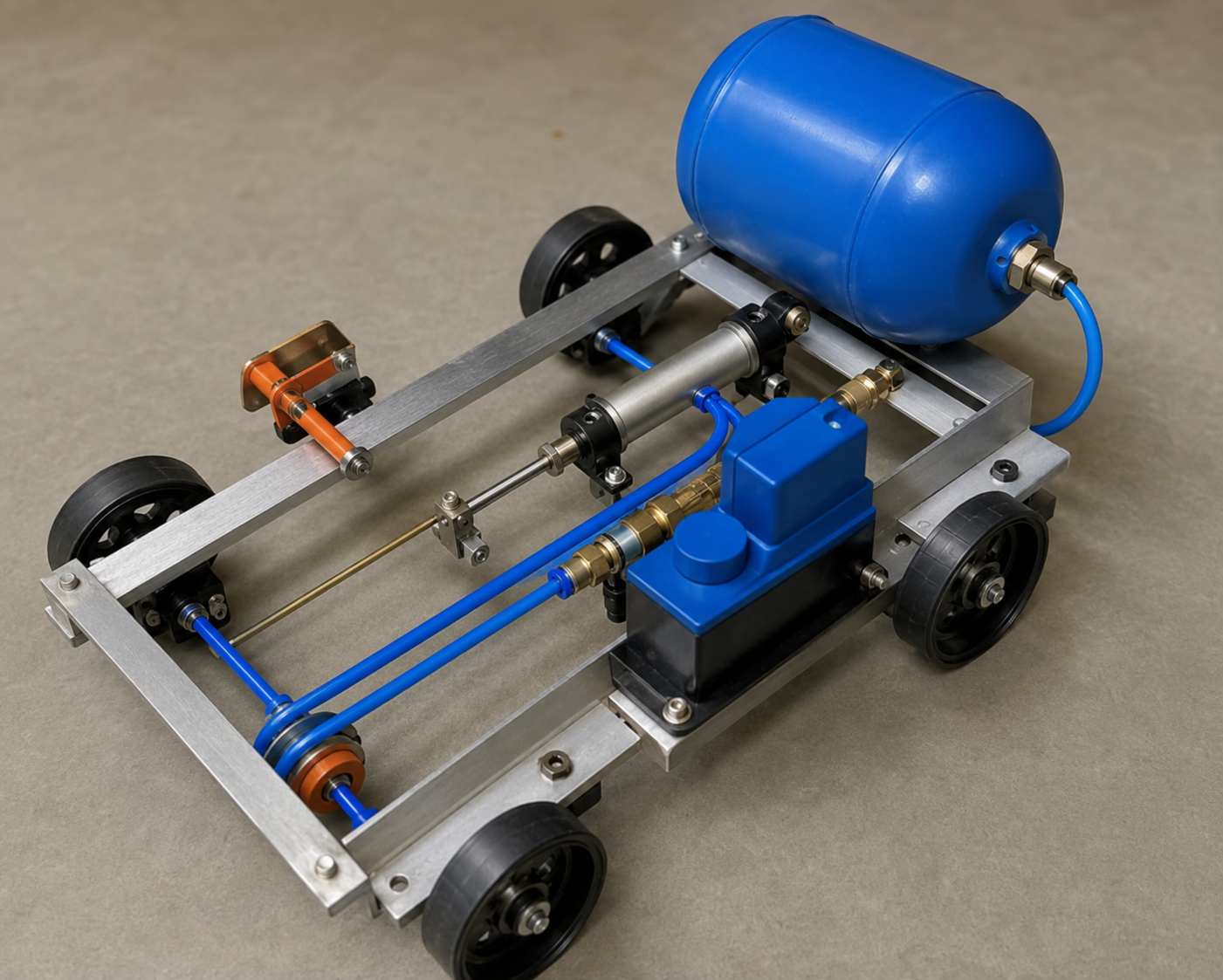
Compressed Air Tank Reciprocating Engine Piston Assembly Pressure Vessel Carbon Fiber Tank Aluminium / Steel Tank Heat Exchanger Zero Emission Drive
Air Powered Car Project fabrication setup

Air Powered Car Project

Mechanical fabrication final year project with complete documentation support.

Light utility vehicles are becoming a popular means of independent transportation for short distances. Rising fuel costs and pollution from petrol and diesel are pushing engineers to develop vehicles powered by alternative energies.

Compressed air storage is an efficient, clean and economical energy method. This project demonstrates compressed-air propulsion using a reciprocating piston engine that expands stored air to drive the vehicle — without burning fuel.

Call: +91 95919 12372

Abstract

Light utility vehicles are becoming very popular means of independent transportation for short distances. Cost and pollution with petrol and diesel are leading vehicle manufacturers to develop vehicles fueled by alternative energies. Engineers are directing their efforts to make use of air as an energy source to run light utility vehicles. The use of compressed air for storing energy is a method that is not only efficient and clean, but also economical.

The major problem with compressed air cars was the lack of torque produced by the engines and the cost of compressing the air. Recently several companies have started to develop compressed air vehicles with many advantages and still many serious bottlenecks to tackle. This project summarizes the principle of technology, latest developments, advantages and problems in using compressed air as a source of energy to run vehicles.

The principle of compressed-air propulsion is to pressurize the storage tank and connect it to a reciprocating engine similar to a steam engine. Instead of mixing fuel with air and burning it to drive pistons with hot expanding gases, compressed air vehicles (CAV) use the expansion of compressed air to drive their pistons — making the technology free from difficulties of using ammonia, petrol, or carbon disulphide as the working fluid.


Working Principle

  • Air is compressed and stored in a high-pressure tank.
  • Stored air is released to a reciprocating piston engine.
  • Air expansion pushes pistons to produce mechanical motion.
  • Motion is transferred to wheels through transmission linkage.

Advantages

  • Clean and pollution-free operation with zero exhaust emissions.
  • Economical energy storage using compressed air technology.
  • No combustion — avoids fuel-related technical and safety issues.
  • Suitable for short-distance light utility vehicle applications.

Challenges

  • Limited torque output compared to conventional engines.
  • High cost of air compression and refilling infrastructure.
  • Pressure vessel must meet strict safety design standards.
  • Range depends on tank volume and operating pressure.

Technical Specifications

Parameter Details
Engine TypeReciprocating compressed air piston engine (up to ~90% efficiency claimed by manufacturers)
Compression RatioAir compressed at about 150 times the pressure used in car tyres or bicycle tyres
Storage PressureUp to 4,500 psi (about 30 MPa) in advanced commercial designs
Tank CapacityUp to ~3,200 cubic feet (around 90 cubic metres) in large-scale systems
Tank MaterialsSteel, aluminium, carbon fiber, kevlar or composite combinations
RefillingService station with heat exchangers, or home/parking lot refill over several hours

What We Provide

ProjectsatBangalore offers complete support for the Air Powered Car Project including working fabrication, project report, PPT, block diagram, viva questions, and demonstration guidance for BE, B.Tech, Diploma, and MTech students in Bangalore.

Working Fabrication
Project Report
PPT Presentation
Block Diagram
Viva Support
Demo Guidance